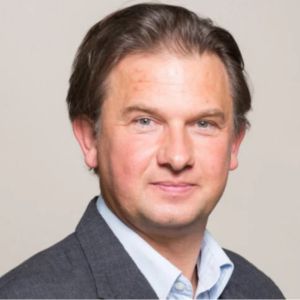
Welcome Address and Keynote Speech by Honorable Chairperson Manolo E. Beelke, Chief Medical Officer, And biotech, Germany"

"Webinar On: ""Gut Microbiome & Neurodegeneration: The “Second Brain” in AD & PD""
Gut microbes are implicated in amyloid and α-synuclein aggregation, inflammation, and
disease progression. Clinical development implications: microbiome biomarkers for patient enrichment, diet/FMT/probiotic trials, and endpoints integrating microbial shifts alongside cognitive decline."
-Pro: “AD and PD begin in the gut — the microbiome is the real driver.”
-Contra: “Microbiome is secondary noise — the brain pathology starts in the CNS.”
neuro
"Webinar On: ""Beyond Neurons: Are AD & PD Glial (Oligodendrocyte) Diseases?""
Oligodendrocyte dysfunction and demyelination are increasingly recognized in AD and PD. This session debates reframing these disorders as glial-driven. Clinical development implications: inclusion of myelin/oligodendrocyte biomarkers in trials, and testing remyelination or glial-modulating therapies as adjuncts."
-Pro: “AD and PD are fundamentally glial disorders.”
-Contra: “Neurons remain the core pathology — glial changes are downstream.”
neuro
"Webinar On: "Sleep as a Window to Neurodegeneration"
Spectral analysis of sleep EEG reveals disease signatures earlier than clinical symptoms. Implications: use of sleep-based biomarkers for trial enrichment, objective endpoints for treatment response, and potential for home-based monitoring to accelerate trial readouts."
-Pro: “Sleep EEG biomarkers should be validated as surrogate endpoints.”
-Contra: “Sleep EEG biomarkers are supportive only, not trial-defining.”
neuro
"Webinar On: "Infection & Stroke: Is Stroke an Immune-Mediated Disease?"
Viral and bacterial infections (zoster, COVID-19, gut dysbiosis) increase stroke risk and affect outcomes. Clinical implications: testing antivirals, vaccines, and immune-modulation in stroke prevention, and including immune biomarkers as trial endpoints."
-Pro: “Stroke is triggered and sustained by infections and immune dysregulation.”
-Contra: “Stroke is purely a vascular event — infections only add risk.”
neuro
Webinar On: "Neurointerfaces & Extended Reality in Cognitive Care: The Future of Neurodiagnostics"
XR and AI-driven neurointerfaces represent not only a technological frontier but also raise critical questions about validation, ethics, and user experience. Integrating neuroimaging, haptic feedback, and biometric data, these systems may transform early detection and personalized interventions in cognitive and mental health. Yet, their translation into clinical practice demands evidence, standardization, and robust regulatory pathways.
-Pro: “Immersive and AI-enabled neurointerfaces will redefine diagnostics and therapy.”
-Contra: “Such technologies risk distraction and over-interpretation without robust validation”
neuro
"Webinar On: "Gene Therapy & Editing: Toward One-Time Cures"
CRISPR, base editing, and prime editing are entering neurological disease trials. Clinical
development focus: trial design for one-time therapies, surrogate endpoints, long-term safety monitoring, and new regulatory paradigms."
-Pro: “Gene editing will cure neurological diseases.”
-Contra: “RNA-targeted therapies will dominate due to safety and feasibility.”
"Webinar On: ""RNA-Targeted Therapies in Neurology""
Antisense oligonucleotides and RNAi agents are transforming SMA, ALS, Huntington’s. Clinical implications: neurofilament and CSF biomarkers as early endpoints, intrathecal vs systemic delivery in trial design, and adaptive trial models for rare disorders."
-Pro: “ASOs and RNAi will transform neurology in the next decade.”
-Contra: “RNA approaches are stopgaps — gene therapy will bypass them.”
neuro
"Webinar On: ""Multiple Sclerosis: EBV, Bacteria, or Both? Rethinking Triggers of Autoimmunity""
EBV infection is a proven MS risk factor, but recent microbiome findings point to bacterial triggers. Debate: is MS viral, bacterial, or multi-hit? Clinical implications: stratifying trials by EBV serostatus or microbiome profile, new endpoints (viral load, microbial biomarkers), and testing vaccines, antivirals, and microbiome interventions."
-Pro: “MS is fundamentally EBV-driven.”
-Contra: “MS is fundamentally bacteria-driven.”
neuro
"Webinar On: ""Neuroinflammation in AD & PD: Target or Bystander?""
Microglia and astrocytes are active drivers in neurodegeneration. Clinical implications: com bining anti-inflammatory drugs with anti-amyloid/anti-synuclein therapies, validating inflammatory biomarkers as endpoints, and adaptive platform trials to test add-on strategies."
-Pro: “Neuroinflammation is the driver — target it early to slow disease.”
-Contra: “Neuroinflammation is a bystander — not a valid primary target.”
neuro
Webinar On: "Neurodivergent Design & Cognitive Environments: Accessibility as Neurology’s Next Frontier"
The convergence of neuroscience, architecture, and inclusive design is opening new pathways for supporting neurodivergent individuals. Neuroaesthetic principles and sensory-aware environments can improve focus, reduce anxiety, and enhance daily functioning. However, the translation of such design principles into clinical neurology and public policy remains underexplored, raising the question of whether accessibility itself can be viewed as a neurological intervention.
-Pro: “Inclusive design and neurodivergent-friendly spaces enhance cognitive health and social integration.”
-Contra: “Such interventions remain sociological, not neurological, and lack clinical evidence.”
neuro
"Webinar On: ""Precision Medicine in Epilepsy: From Genes to Therapies""
Monogenic epilepsies (e.g. Dravet, SCN8A) are leading the way for gene-targeted therapies. Clinical implications: patient selection via genetic profiling, N-of-1 or basket trial designs, and use of electrophysiological biomarkers as surrogate endpoints."
-Pro: “Epilepsy will be cured through gene-targeted therapies.”
-Contra: “Devices will become the dominant strategy for refractory epilepsy.”
"Webinar On: ""Neurostimulation & Devices: Beyond Medication""
Responsive neurostimulation, adaptive VNS, DBS, and AI-guided closed-loop systems are transforming refractory epilepsy. Clinical implications: trial design for devices (blinding challenges, functional outcomes), combining neuromodulation with pharmacotherapy, and endpoints expanding beyond seizure counts. "
-Pro: “Neurostimulation should be the frontline therapy for refractory epilepsy.”
-Contra: “Drugs remain the backbone — devices are secondary.”
neuro
"Webinar On: ""Immunotherapy Breakthroughs in Brain Tumors""
CAR-T, neoantigen vaccines, and oncolytic viruses show early promise in gliomas. Clinical implications: designing trials to overcome barriers like tumor heterogeneity and BBB penetration, defining immune biomarkers as endpoints, and integrating combination strategies."
-Pro: “Immunotherapy will cure glioblastoma.”
-Contra: “Only precision molecular targeting can cure glioblastoma.”
neuro
"Webinar On: ""Precision Medicine & Novel Targets in Neuro-Oncology""
IDH inhibitors, BRAF/MEK inhibitors, and new molecular targets are reshaping treatment of gliomas. Clinical implications: genomic profiling as mandatory in trial recruitment, adaptive basket/platform trials for rare mutations, and liquid biopsy for longitudinal monitoring."
-Pro: “Histology should remain the basis for glioma treatment decisions.”
-Contra: “Only molecular profiling should define glioma treatment.”
neuro
Workshop On: "Neuroinclusive Futures: Translating Neuroscience into Environments, Policies, and Communities" This 1-hour interactive workshop explores how neuroscience can inform inclusive environments, public policies, and community design. Drawing from real-world examples across India, the GCC, and Europe — including Kerala’s neurodivergent-friendly coworking hub and the Dubai Future Foundation’s Health Metaverse — the session connects neuroscience with social innovation and cognitive accessibility. Participants will collaboratively identify how neuroinclusive principles can shape clinical environments, education, and workplaces. A short virtual tour or video feature may complement the session. This workshop also serves as a bridge toward NeuroSeries 2027 in Germany, where neuroinclusion and accessibility will be core themes in the in-person format.